
How to Find a Floral Tea You Enjoy
If you enjoy floral aromas but are unsure which tea to try, think about what you would like to find in the cup. You might want a clear jasmine fragrance one day and a quieter touch of rose beside the leaves the next. Both preferences fit within floral tea, but they can lead you to different blends.
Start with a familiar flower and check the base
Choose one floral aroma you already enjoy, then read the rest of the description. Does the blend also mention fruit or almond? If you want to get to know one particular aroma, a less complicated description may make the choice easier.
Check the tea base next. The flowers are part of the experience, alongside the taste of the leaves. If you already have a favourite tea, you could begin with the same tea type and explore a different aroma, rather than changing everything at once.
A flower’s name does not tell the whole recipe
Read the tasting notes alongside the ingredients. Floral aromas can involve flavourings, essential oils or contact between the leaves and flowers. A flower named in the description does not necessarily appear in the blend as petals.
In its guide to scented tea, Dammann Frères describes placing tea leaves in contact with jasmine flowers to take on their fragrance, then removing the flowers. Visible petals alone therefore tell you little about how a tea acquired its aroma.
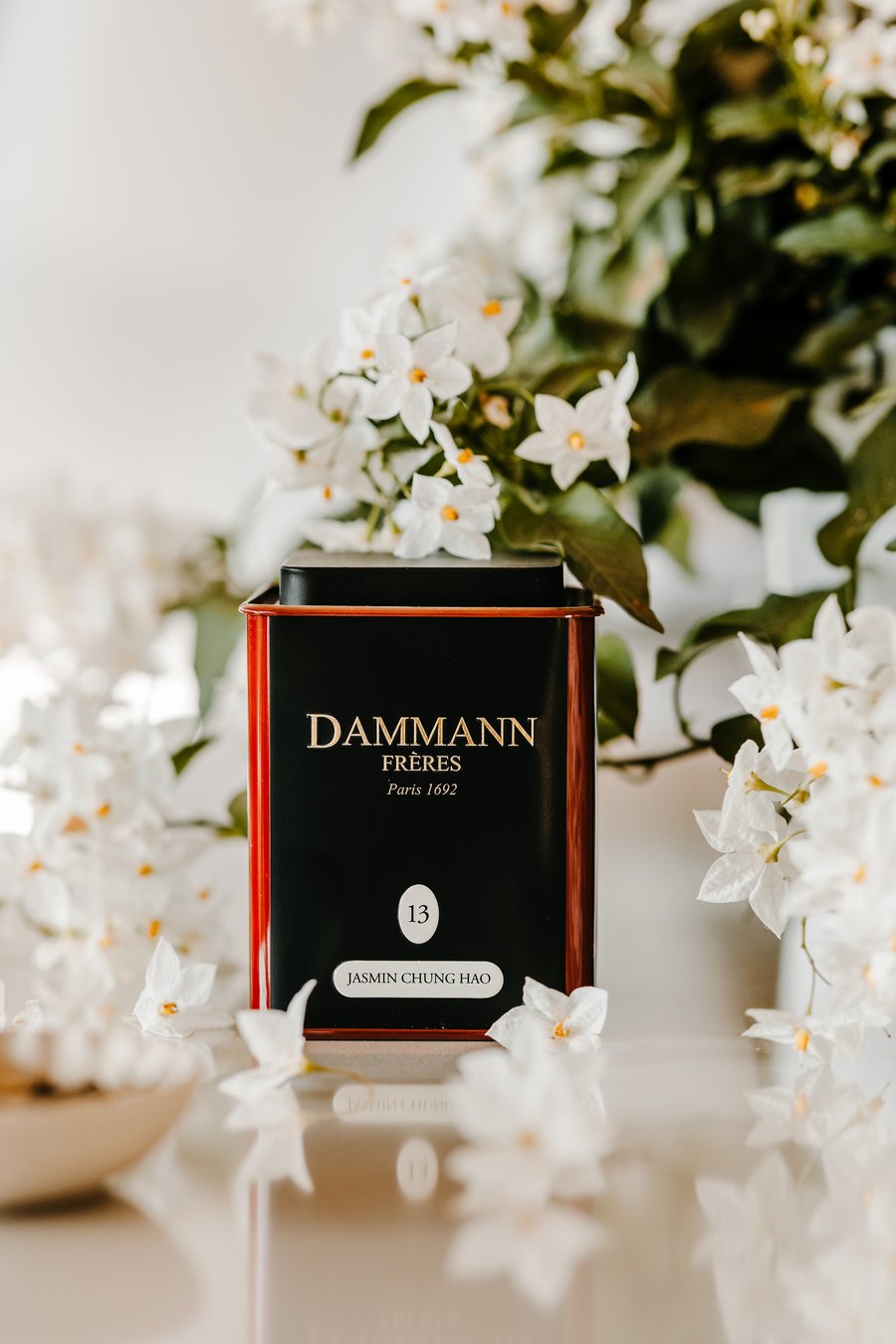
The photograph here shows Jasmin Chung Hao from that guide. Week-end à Paris, the blending example below, is a different tea.
Read a recipe through Week-end à Paris
Dammann Frères’ Week-end à Paris has an oolong base. Its ingredients list cherry-blossom, peach-blossom and almond flavourings, rose essential oil and flower petals.
That lets you separate the tea base from the ingredients used for aroma and the other additions. An evocative name is a starting point; the recipe gives you more to work with when deciding whether you would like to try it.
Give your first cup a starting point you can repeat
Use the tea quantity, water temperature and steeping time recommended for that blend. Choose a cup whose volume you know and set a timer. Remove the sachet or infuser when the time is up, then taste once the tea is comfortable to drink.
If the aroma feels more prominent than you would like, try a little less tea next time, keeping the cup, water volume and other conditions the same. Notice whether you still enjoy the taste of the leaves. A short note about what you liked is enough to guide another brew.
Try one simple pairing
For a first food pairing, you might try a plain biscuit. Taste the tea on its own, then again after a bite. You can decide whether you prefer the two together or separately. This is an experiment in your own taste, rather than a rule about which foods belong with floral tea.
At Happy Gourmet, the importer of Dammann Frères in Thailand, these small discoveries are part of the pleasure of choosing tea. If the first cup is not quite right, remember what you did enjoy: the aroma, the leaves or the way you drank it. That gives your next choice somewhere to begin.